How to Sanitize Wooden Spoons Correctly China Top 10 Types?

Time:2026-09-29 Author:Sienna
0%

Wooden spoons are everyday tools, but their grooves and handles can trap food, moisture, and odors. Knowing how to sanitize wooden spoons correctly helps reduce contamination risks without needlessly damaging the wood. The CDC estimates that about 48 million people in the United States become ill from foodborne diseases each year. That figure covers many causes, not wooden spoons alone, but it shows why routine kitchen hygiene matters.

Food-safety researcher Dean O. Cliver studied bacteria on wooden and plastic food-preparation surfaces. His research suggests that wood’s behavior differs from plastic: bacteria can move below the surface, where they may not remain recoverable. This is not a reason to skip cleaning. It is a reason to avoid treating wood like an indestructible material. Wash each spoon promptly with hot water and dish soap, paying attention to the bowl and the joint near the handle. Rinse it well, then let it air-dry completely. Never leave it soaking beside the sink. Small habits matter.

This guide considers ten common wooden-spoon types, including beech, maple, olive wood, and bamboo. Their grain, finish, and construction can affect care. A cracked spoon needs closer inspection; a rough, splintering surface may be past its useful life. For routine home use, cleaning and thorough drying are practical essentials. Sanitizing products should only be used when their labels permit food-contact use. Wood can be forgiving, but it is not maintenance-free.
How to Sanitize Wooden Spoons Correctly China Top 10 Types?

Classify China’s 10 Common Wooden Spoon Types by Wood, Shape, and Use

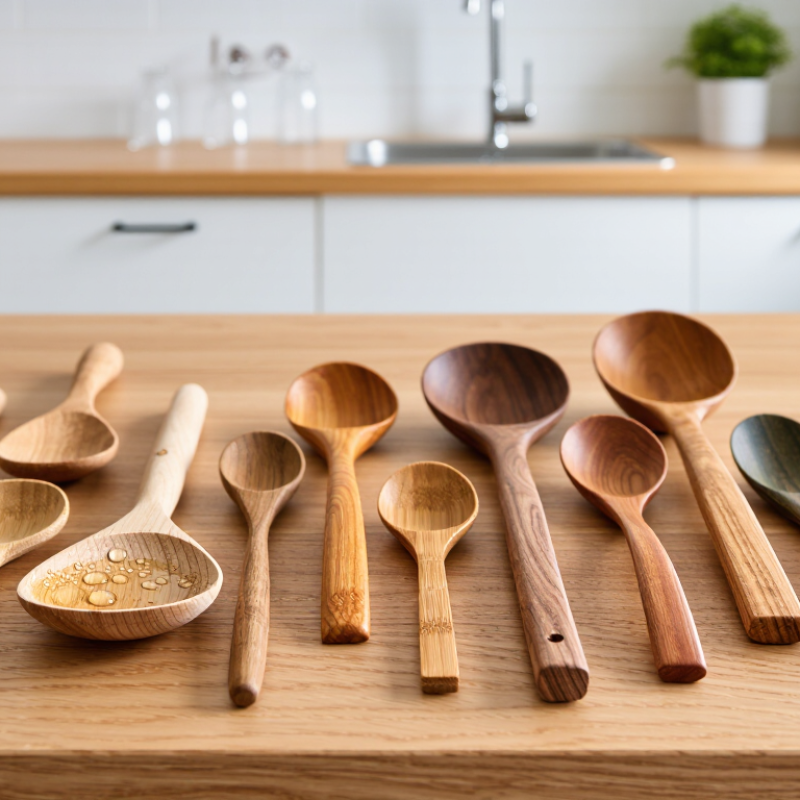
China’s wooden spoons can be grouped by wood, shape, and kitchen task; these are practical categories, not a market ranking. Beech round-bowl spoons suit soups, while maple flat-edged stirrers scrape pans. Birch tasting spoons are handy for small portions; cherry rice paddles lift grains gently. Walnut serving spoons offer broad bowls, and olivewood narrow spoons suit tasting. Acacia deep ladles serve stews; teak broad turners flip vegetables. Basswood lightweight spoons work for porridge, while sycamore slotted spoons drain vegetables. Bamboo is often sold alongside these types, though botanically it is a grass, not wood.

Wood choice does not replace careful cleaning. Wash promptly with hot, soapy water, rinse, and air-dry completely; avoid soaking or leaving spoons beside a wet sink. The USDA Forest Products Laboratory’s Wood Handbook reports that wood’s fiber saturation point averages about 30% moisture content, with variation by species. Moisture changes below that point can cause shrinkage, so thorough drying matters. For a sanitizing reference, USDA FSIS recommends one tablespoon of unscented liquid chlorine bleach per gallon of water for cutting boards; use this only when the utensil’s care directions permit, then rinse well. A spoon can look dry while its handle joint stays damp. That detail is easy to miss.

Remove Food Residue, Then Wash with Detergent and Clean Water

How to Sanitize Wooden Spoons Correctly

Scrape food residue into the bin before washing. Dried sauce around the spoon’s bowl can shelter grime, so loosen it under warm running water. Add a little dish detergent, then scrub every surface with a clean sponge or brush. Pay attention to the neck and handle joint. Rinse with clean water until the surface feels free of soap. Small details matter. Dry the spoon promptly with a clean towel, then let it air-dry fully before storing. Avoid leaving it submerged; prolonged soaking can encourage swelling and cracking.

NSF International’s 2013 Household Germ Study found coliform bacteria on 75% of the dish sponges and cloths tested in 22 homes. The study did not test wooden spoons, but it highlights why the washing tool matters: use a clean one, not a damp sponge with old food particles. Washing removes residue; sanitizing is a separate step. Follow the spoon maker’s care instructions if additional sanitizing is needed. Wood can wear unevenly, and I would not assume every spoon tolerates the same treatment.

Tips: Wash soon after use, especially after sticky foods. Check for deep cracks or rough, splintering areas. If residue remains, scrub gently again and rinse thoroughly. Dry with airflow on all sides.

Sanitize Food-Contact Surfaces: FDA Food Code Requires 171°F Water for 30 Seconds

How to Sanitize Wooden Spoons Correctly: China’s Top 10 Types

Wooden spoons touch sauces, soups, dough, and raw ingredients. Their surfaces can hold moisture, especially inside scratches and small cracks. Wash each spoon immediately with hot water and dish detergent. Scrub the bowl, handle, and edges carefully. Rinse away all soap before sanitizing.

The FDA Food Code specifies water at 171°F (77°C) for 30 seconds when hot-water sanitizing food-contact surfaces. Use a calibrated thermometer, not a guess. Fully immerse the cleaned spoon, keeping every surface underwater for the required time. A crowded pot may cool quickly. Check the temperature again. Then place the spoon on a clean rack and let it air-dry completely.

Do not soak wood for hours.

Dry wood is less likely to support unwanted microbial growth. Avoid storing spoons in a closed container while damp. Inspect them often for deep grooves, swelling, dark spots, or loose fibers. A damaged spoon may be impossible to sanitize reliably. Replace it when cleaning no longer reaches the entire surface. I once underestimated how quickly a rough handle could collect residue. That small oversight changed my cleaning routine. For commercial kitchens, follow the local health authority’s requirements and keep sanitizing records when required.

Air-Dry Completely and Inspect for Cracks, Odors, or Splintering

After washing a wooden spoon, rinse away all soap and food particles. Sanitizing is incomplete if moisture remains trapped in the grain. Pat the spoon with a clean towel, then place it upright or on its side in an open, well-ventilated area. Air must reach both surfaces.

Let it air-dry completely before storing it in a drawer or container. Do not use intense heat to speed the process. A hot oven or direct heater may warp the handle and widen small cracks. The center can stay damp even when the surface feels dry. Give it extra time.

Inspect it under bright light. Look for hairline cracks, dark spots, rough edges, or raised fibers. Run a clean fingertip gently along the bowl and handle. Stop if it feels sharp. Smell the spoon after drying. A sour, musty, or greasy odor may indicate absorbed residue or hidden moisture. Persistent odor deserves attention.

I once returned a spoon to the drawer too early. It developed a dull smell within days. That small mistake changed my routine. Now I check the handle, neck, and bowl after every deep wash. Different wood types dry at different speeds, so a fixed schedule can be unreliable. Replace any spoon with deep splitting, loose fibers, or repeated odor. A minor surface mark may be harmless, but ignoring change is risky.

How to Sanitize Wooden Spoons Correctly China Top 10 Types? - Air-Dry Completely and Inspect for Cracks, Odors, or Splintering

Wooden spoons come in many shapes. Whatever the design, clean them promptly after use, avoid prolonged soaking, and let them dry completely before storing.

10 Common Wooden Spoon Forms and Their Care Checks
No. Spoon Type or Form Typical Use Cleaning and Drying Inspect For
1 Solid mixing spoon Stirring sauces, batters, and other mixtures. Wash all surfaces with hot, soapy water, rinse, and air-dry fully. Cracks around the bowl and handle joint; persistent odors.
2 Slotted spoon Lifting foods while allowing liquid to drain through slots. Pay close attention to the edges and inside corners of each slot when washing; dry with the slots unobstructed. Food residue trapped in slots, rough edges, or splinters.
3 Perforated spoon Scooping or stirring foods while letting liquid pass through small holes. Wash around every perforation, rinse thoroughly, and air-dry completely. Residue in holes, cracks between holes, or splintering.
4 Rice paddle Serving and separating cooked rice. Wash both faces and the handle after use; dry with air circulating around the paddle. Cracks, rough patches, or rice residue adhering to the surface.
5 Wooden spatula Turning or stirring foods in a pan; some designs have a broad, flat edge. Wash the broad faces, thin edge, and handle; do not leave it soaking in a sink. Splits along the thin edge, deep scratches, or splinters.
6 Corner spoon Stirring food and reaching into the corners of pots or pans. Clean the shaped tip and its edges thoroughly, then air-dry completely. Food lodged at the tip, cracks, or rough edges.
7 Long-handled spoon Stirring food in deep pots or containers. Wash the full length of the handle as well as the bowl; dry before putting it away. Cracks or looseness where the handle meets the bowl.
8 Small tasting spoon Sampling or stirring small quantities of food. Wash promptly after contact with food and avoid using a tasting spoon to return sampled food to a shared dish. Stains, lingering odors, cracks, or splintering.
9 Wooden ladle Scooping and serving soups, stews, or other liquids. Wash the bowl and handle, rinse away soap, and dry with the bowl positioned to drain. Cracks in the bowl, trapped residue, or a damaged handle joint.
10 Serving spoon Portioning and serving foods at the table. Wash the entire food-contact surface after use and let it air-dry fully before storage. Deep grooves, cracks, persistent odors, or splinters.

Sanitation reminder: Washing with hot, soapy water removes food residue; sanitizing is a separate step when required. Use only a sanitizer labeled for food-contact surfaces and follow its directions. Do not put wooden spoons in a dishwasher unless the maker specifically says they are dishwasher-safe. Retire a spoon that remains odorous after cleaning or has deep cracks, splinters, or other damage.

Store Dry; Replace Damaged Spoons to Reduce Food-Safety Risks

After washing a wooden spoon with hot, soapy water, rinse away all visible food residue. Pay attention to the bowl and the narrow area where the handle meets it. Dry the spoon with a clean towel, then let it finish air-drying in an open space. Keep it off wet countertops. A spoon stored while damp can stay moist inside a crowded drawer, especially near other utensils. That small detail is easy to miss.

Store wooden spoons only when fully dry, with room for air to circulate. Avoid sealed containers and drawers that still feel humid. Check each spoon regularly under good light. Fine surface marks may be harmless, but deep cracks, rough splinters, loose pieces, or grooves that trap food are reasons to replace it. Don’t keep using a spoon just because it still looks sturdy. Damaged surfaces are harder to clean thoroughly, and trapped residue can create food-safety concerns. If you are unsure whether a crack is superficial, set the spoon aside and inspect it again; honestly, judgment is not always easy. Follow any care instructions supplied with the utensil, since wood and finishes can differ.

FAQS

How should I wash a wooden spoon after use?

Scrape leftover food into the bin. Rinse dried sauce under warm running water. Scrub every surface with detergent and a clean sponge or brush. Rinse until no soap remains.

Which parts of the spoon need extra attention?

Clean the bowl, neck, and handle joint carefully. Food can hide in the narrow connection. Check the underside and edges too.

Can I leave a wooden spoon soaking in water?

Avoid prolonged soaking. Wood may swell, crack, or become uneven. Wash it, dry it promptly, and let it air-dry completely.

How should I dry a wooden spoon?

Wipe it with a clean towel first. Then place it in an open area with airflow on all sides. Do not store it while damp.

Is washing the same as sanitizing?

No. Washing removes food residue and soap. Sanitizing is a separate step. Follow the utensil’s care instructions before using any extra treatment.

Why should I use a clean sponge or brush?

Damp cleaning tools can hold old food particles and bacteria. Use a clean sponge or brush. This small detail matters.

Where should I store a wooden spoon?

Store it only when fully dry. Keep it away from wet countertops and humid drawers. Leave space around it for air circulation.

When should I replace a wooden spoon?

Replace it if you find deep cracks, rough splinters, loose pieces, or grooves trapping food. Damaged areas are harder to clean thoroughly.

What should I do if I cannot judge a crack?

Set the spoon aside and inspect it under good light. A fine mark may be harmless, but certainty is not always easy. When unsure, replacement is the safer choice.

Conclusion

Learning how to sanitize wooden spoons correctly starts with understanding their differences. China’s ten common wooden spoon types can be classified by wood, shape, and intended use, including stirring, serving, scooping, and cooking designs. Regardless of type, remove all food residue immediately after use, then wash the spoon thoroughly with detergent and clean water. Pay special attention to carved areas, edges, and the handle, where moisture and food particles may remain.

For food-contact surfaces, sanitizing requires sufficient heat; the FDA Food Code specifies water at 171°F for at least 30 seconds. After sanitizing, place the spoon in a clean, well-ventilated area and let it air-dry completely. Never store it while damp, as trapped moisture can encourage odors and microbial growth. Inspect wooden spoons regularly for cracks, rough splinters, deep stains, or persistent odors. Damaged utensils should be replaced promptly to reduce food-safety risks and maintain proper kitchen hygiene.

Sienna

Sienna

Sienna is a skilled marketing professional with a deep expertise in our company’s core products and services. With a passion for innovation and detail, she plays a pivotal role in crafting insightful blog posts that not only highlight the unique features of our offerings but also provide valuable......